Don’t Ignore these Warning Signs that a Tree Is Creating a Safety Hazard for Your Home
Ingram’s Tree Service • January 7, 2026
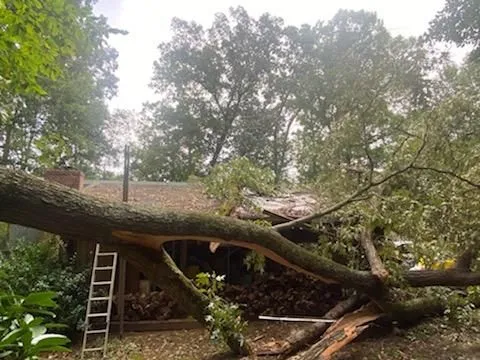
Large tree fallen on a house roof. A ladder leans against the building. Overcast sky.

When large trees are unhealthy or unstable, they can pose serious risks. A tree that is too close to your home or showing signs of decline can cause property damage or serious injuries. Being proactive and recognizing warning signs can prevent accidents and costly repairs. At Ingram’s Tree Service, we can identify hazardous trees and safely remove them. Here are four warning signs that a tree on your property may be creating a safety hazard.


Cracks in the Trunk

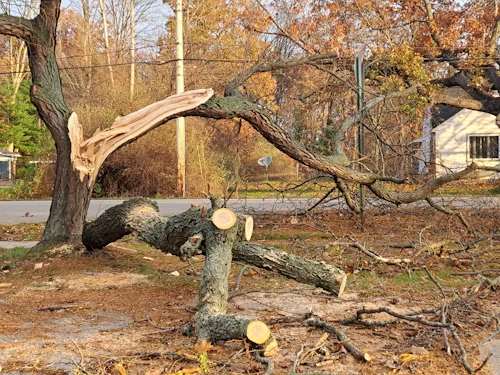
A trunk with visible cracks or splits can indicate structural weakness, which increases the risk of the tree falling. These splits often develop over time due to age, decay, or environmental stress. Even seemingly small cracks should not be ignored, as they may compromise the tree’s stability. A professional arborist can assess the severity and recommend the necessary steps to protect your home.


Leaning Trees

A tree that suddenly leans or tilts more than usual may be experiencing root damage or soil instability. While some trees naturally grow at a slight angle, a noticeable lean can signal a risk of toppling, especially during storms. A leaning tree near a house, driveway, or utility line is particularly concerning and should be evaluated by an arborist as soon as possible to prevent accidents.


Fungal Growth or Rot

The presence of fungal growth on the trunk or near the base of a tree often indicates internal decay. Rot weakens the structural integrity of the tree, making it more likely to collapse. Ignoring these signs can lead to sudden failure, especially during storms. An arborist can identify the extent of the decay and determine whether treatment or removal is the safest course of action.


Root Damage/Soil Disturbance

Visible roots that are cracked, exposed, or showing signs of decay can compromise a tree’s stability. Also, soil heaving or erosion around the base of a tree can indicate a weakening root system. Since roots anchor the tree, any damage in this area increases the likelihood of tipping. Professional evaluation can identify underlying problems and recommend solutions to protect both the tree and your property.


Tree Removal in High Point, NC

When you need tree removal High Point, NC and the surrounding area, contact Ingram’s Tree Service at (336) 471-4934. Feel free to give us a call to request a free arborist estimate in High Point, NC!
By Ingram’s Tree Service • November 16, 2026
Tree trimming and tree pruning are two common tree care services, but they serve different purposes and address different needs. Understanding the differences can help you determine which service is appropriate for your situation. At Ingram’s Tree Service, we provide expert tree trimming and pruning in the greater High Point, NC area. Here’s a look at some of the differences. Tree Trimming Focuses on Appearance and Shape Tree trimming generally focuses on maintaining a tree's size, shape, and overall appearance. This service is especially useful for ornamental trees, hedges, and other landscape features that require a neat, controlled look. Trimming can remove overgrown branches that interfere with walkways, buildings, driveways, or other parts of your property. Regular trimming also helps keep trees from obstructing signs and windows. A professional tree service can trim your trees while maintaining their natural form and avoiding unnecessary damage. Tree Pruning Promotes Tree Health Tree pruning primarily focuses on improving a tree's health, structure, and long-term development. During pruning, an arborist removes dead, diseased, damaged, and poorly positioned branches that may threaten the tree's well-being. Selective pruning can improve airflow through the canopy and encourage stronger growth. Removing infected limbs may also help limit the spread of certain diseases. Proper pruning techniques are important because cutting branches incorrectly can create wounds, weaken the tree, and increase its vulnerability to pests and decay. The Techniques Used Can Differ Although trimming and pruning share some techniques, the approach depends on the intended outcome. Trimming often involves selectively cutting back overgrowth to maintain a desired shape or clearance. Pruning requires careful evaluation of branch structure, growth patterns, and potential health concerns. Arborists consider where cuts should be made to support healthy wound closure and preserve the tree's natural structure. Both services should avoid excessive cutting, which can stress trees. Timing Depends on the Tree's Needs The best time for trimming or pruning depends on the tree species, its condition, and the reason for the work. Some trees benefit from pruning during dormancy, while others require attention when damaged or diseased branches pose an immediate concern. Trimming schedules may depend on how quickly a tree grows and how much clearance is needed around structures or walkways. An arborist can recommend appropriate timing based on the specific needs of your trees. Professional Tree Trimming and Pruning in High Point, NC When you need an arborist in High Point and the surrounding area, contact Ingram’s Tree Service at  (336) 471-4934  . Feel free to give us a call to request an arborist estimate in High Point!
By Ingram’s Tree Service • October 15, 2026
Strong winds can place tremendous stress on trees, particularly those that are already weakened by disease, structural damage, root problems, or age. While it’s impossible to predict exactly how a tree will respond to a severe storm, certain warning signs may indicate increased risk of failure. Identifying these conditions early gives you an opportunity to have the tree professionally evaluated before high winds create a very dangerous situation. At Ingram’s Tree Service, we provide expert hazardous tree removal in the greater High Point area. Here are four indications that a tree may be especially prone to toppling during severe weather. A Noticeable or Recently Developed Lean A tree that leans significantly may have an increased risk of falling, especially if the lean has developed recently. Changes in soil conditions, root damage, erosion, and structural problems can affect a tree's stability. Pay particular attention when a leaning tree is positioned near your home, vehicles, or walkways. Exposed or Damaged Roots Healthy roots help anchor a tree securely in the ground. Roots that are exposed, broken, decaying, or damaged can reduce a tree's stability. Construction activity, soil erosion, flooding, and disease can all affect the root system. If you notice soil lifting or cracking around the base of a tree, an arborist should evaluate the condition before the next major storm. Signs of Decay or Disease Disease and decay can weaken a tree from the inside, sometimes without obvious external symptoms. Fungal growth, hollow areas, extensive dead branches, peeling bark, and significant canopy decline can all warrant closer inspection. A weakened tree may have less structural strength than it appears to have, increasing concerns during periods of strong wind. Splits in the Trunk Large cracks, deep splits, and cavities in the trunk can compromise a tree's structural strength. These issues may become particularly concerning when strong winds place additional pressure on the trunk and canopy. Although not every crack means a tree is destined to fall, significant trunk damage should be professionally inspected to determine whether taking action is necessary. Hazardous Tree Removal in High Point, NC For expert hazardous tree removal in High Point and the surrounding area, contact Ingram’s Tree Service at  (336) 471-4934  . Feel free to give us a call to arrange a local arborist estimate!
By Ingram's Tree Service • September 14, 2026
Severe weather can leave trees with broken branches, damaged trunks, exposed roots, and weakened structures. Unfortunately, some storm damage isn't obvious from the ground, and a tree that appears stable may still pose a serious hazard. Having an arborist inspect storm-damaged trees can help identify hidden problems and decide what should be done next. At Ingram's Tree Service, our local arborists can evaluate storm-damaged trees and determine the right action to take. Here are four important reasons to have an arborist evaluate trees after a major storm. Identify Hidden Structural Damage Storms can cause splits, internal damage, and weakened branch attachments that aren't always easy to see. A tree may remain standing even though its structural integrity has been compromised. An arborist has the training to evaluate the trunk, major limbs, root system, and branch connections for potential hazards. Identifying hidden damage can help determine whether pruning, removal, or additional monitoring is appropriate. Reduce the Risk of Falling Branches Broken and partially detached branches can become dangerous after a storm. Even limbs that remain attached may be weakened and could fall later because of wind, rain, or other additional stress. An arborist can identify hazardous branches and recommend appropriate pruning or removal. Addressing these problems promptly can reduce risks to people and property. Assess Root and Soil Damage Heavy winds can place tremendous stress on a tree's root system. Storms may expose roots, disturb surrounding soil, or cause a tree to shift or lean. Root damage can compromise stability even when the canopy appears relatively intact. An arborist can evaluate the tree's base and surrounding ground to determine whether the tree remains stable and what steps may be necessary to address the damage. Determine Whether a Tree Can Be Saved Not every storm-damaged tree needs to be removed. Depending on the extent of the damage, some trees may be capable of recovering with proper care. An arborist can assess the tree's overall condition and determine whether selective pruning or other treatments may allow it to remain in place. Professional evaluation can help homeowners avoid unnecessary removal while still addressing legitimate safety concerns. Arborist in High Point, NC When you need tree care in High Point, NC and the surrounding area, contact Ingram’s Tree Service at  (336) 471-4934  . We provide expertise with both residential and commercial tree services in High Point. Feel free to give us a call to ask for a local arborist estimate!
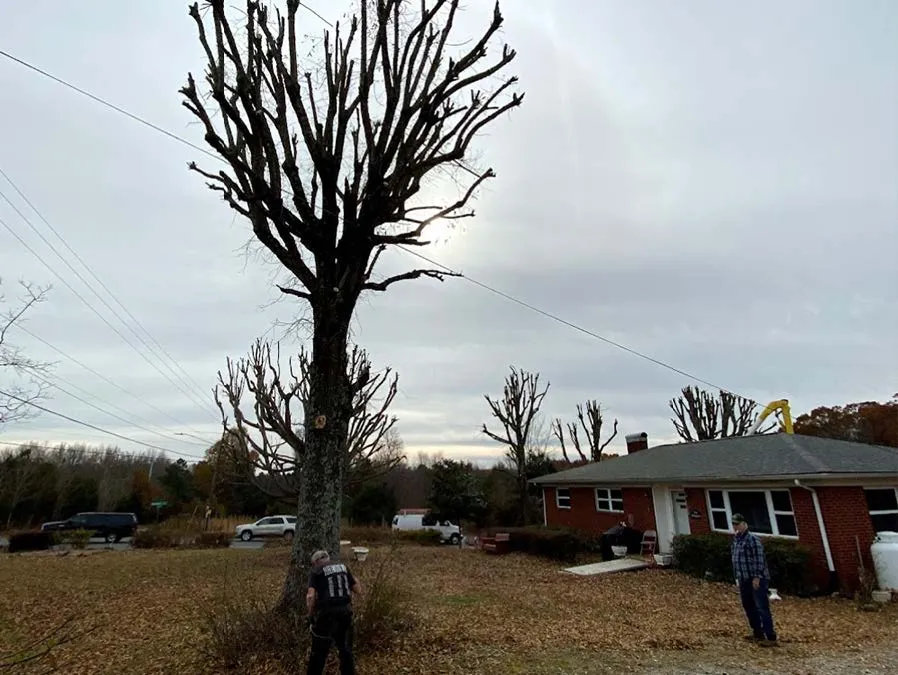
A pruned tree in a yard beside a brick house, with fallen leaves and two people nearby.
By Ingram’s Tree Service • August 15, 2026
Because tree removal involves specialized equipment and potentially hazardous conditions, many property owners have questions about the process before scheduling service. Understanding what professional tree removal entails can help you make informed decisions. At Ingram’s Tree Service, our local arborists are happy to answer your questions about tree removal in the greater High Point area. When Is Professional Tree Removal Necessary? Professional tree removal is recommended when a tree poses a safety risk or can no longer be preserved. Common reasons include severe storm damage, extensive decay, significant leaning, disease, insect infestations, or root damage that compromises stability. Trees growing too close to homes, garages, utility lines, or other structures may also require removal if they threaten nearby property. A qualified tree professional can evaluate the tree and determine whether removal is the most appropriate solution. Why Should I Hire a Professional Instead of Removing the Tree Myself? Tree removal is one of the most dangerous types of outdoor work. Even relatively small trees can fall unpredictably, while large trees require careful planning and specialized equipment to remove safely. Professional tree removal companies have the experience, safety training, and equipment needed to dismantle trees in a controlled manner. Hiring professionals greatly reduces the risk of injury and property damage. What Happens to the Tree After It's Removed? Removal typically includes debris cleanup as part of the service. Branches, brush, and trunk sections are hauled away or processed into wood chips. Depending on your preferences, larger logs may be cut into firewood and left on the property. Can the Stump Be Removed at the Same Time? Yes. You can also opt for stump grinding or complete stump removal. Eliminating the stump reduces tripping hazards, discourages insect infestations, and prevents new sprouts from growing. Removing the stump also makes it easier to plant grass, install landscaping, or use the area for other outdoor improvements. Where Can I Find Professional Tree Removal in High Point, NC? For expert tree removal in High Point and the surrounding area, contact Ingram’s Tree Service at  (336) 471-4934  . Feel free to give us a call to ask for a local arborist estimate!
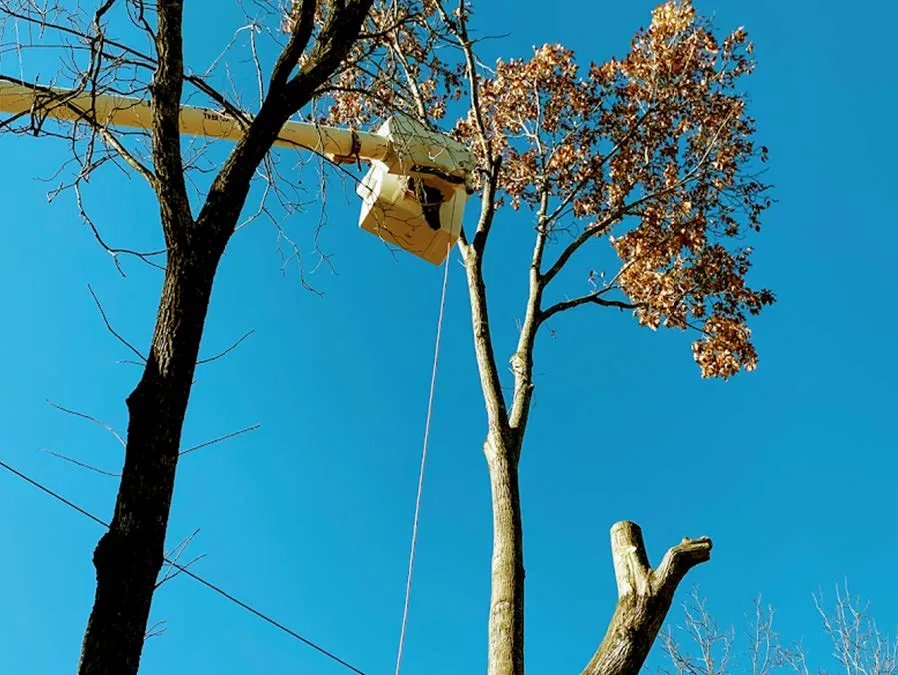
Tree trimmer in a bucket lift pruning tall trees against a bright blue sky
By Ingram’s Tree Service • July 13, 2026
Protect your commercial property with expert arborist evaluations. Identify risks & enhance value with Ingram’s Tree Service.
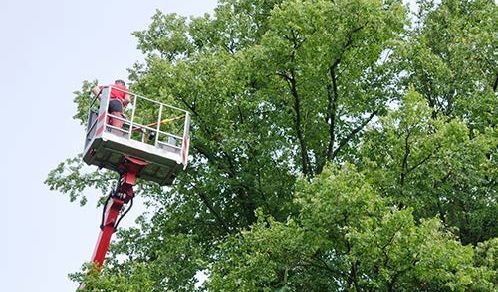
Worker in a red cherry picker trimming a tall green tree
By Ingram’sTree Service • June 15, 2026
Prepare your trees for hurricane season with expert pruning & health assessments. Contact Ingram’s Tree Service today!
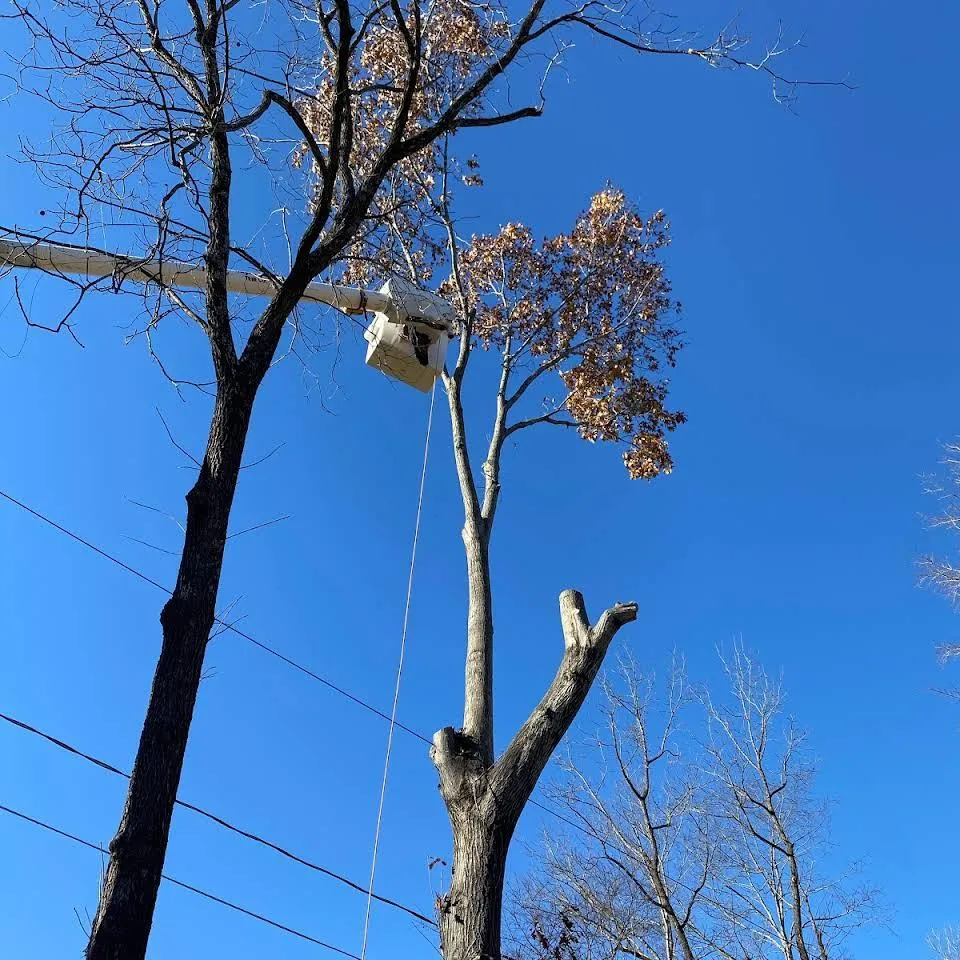
Tree trimmers in a bucket lift pruning tall bare trees against a blue sky
By Ingram’s Tree Service • May 14, 2026
Identify signs of a dying tree & when to call for help. Ingram’s Tree Service provides expert evaluations in High Point, NC.
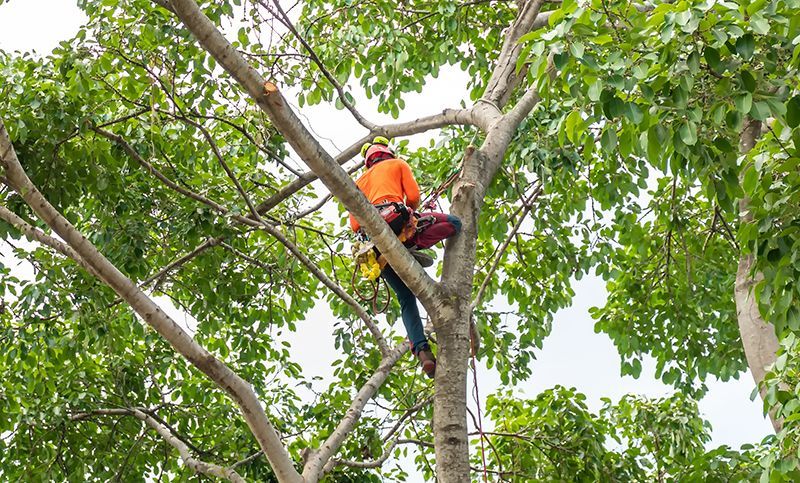
A worker in an orange shirt and safety helmet uses a chainsaw to trim branches high up in a large, green tree.
By Ingram’s Tree Service • April 9, 2026
Read the latest reviews for Ingram’s Tree Service. See how we excel in tree trimming, removal, & stump grinding. Contact us today!
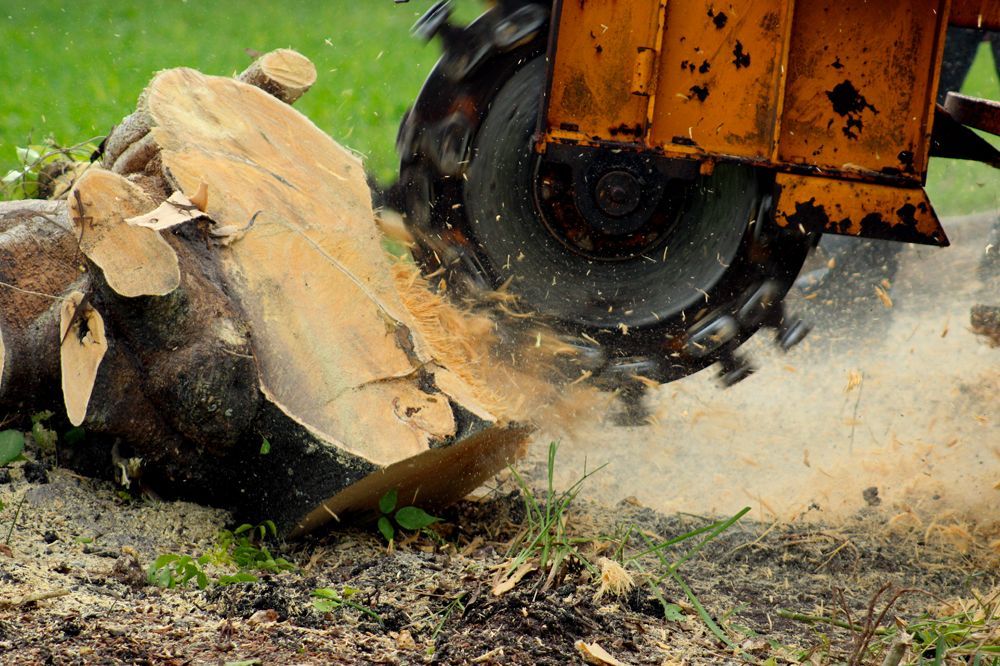
A yellow stump grinder cuts into a large tree stump, throwing wood chips across a grassy area.
By Ingram’s Tree Service • March 16, 2026
Get essential info on stump grinding & removal. Learn about safety & pest control. Contact Ingram’s Tree Service for expert help!
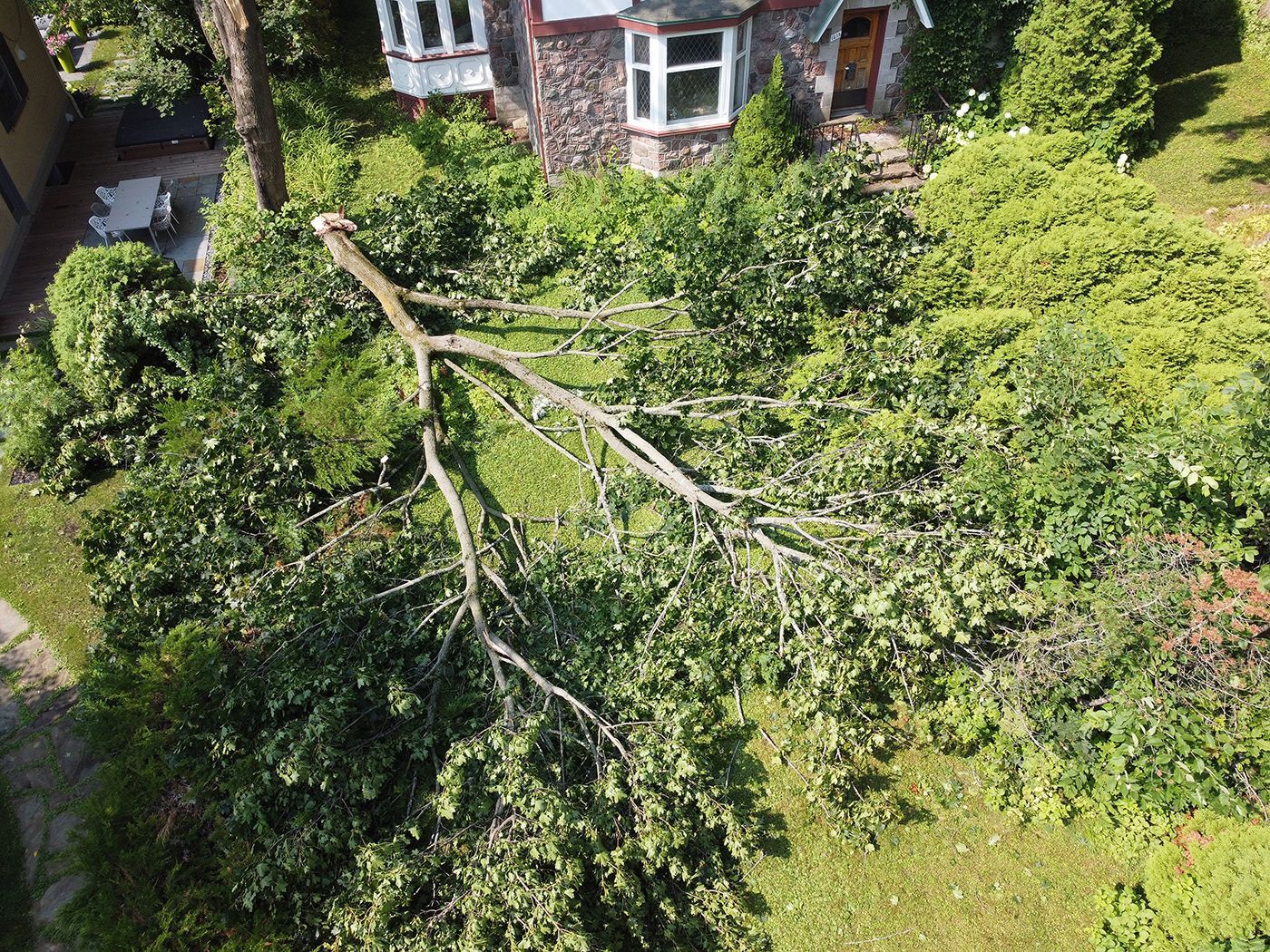
Fallen tree branch on lawn in front of a house, surrounded by bushes and greenery.
By Ingram’s Tree Service • February 14, 2026
Learn about dead tree signs, risks, & removal processes. Contact Ingram’s Tree Service for safe tree removal solutions!
Show More